Japan Work Permit for Indians: Employer Steps and Timeline
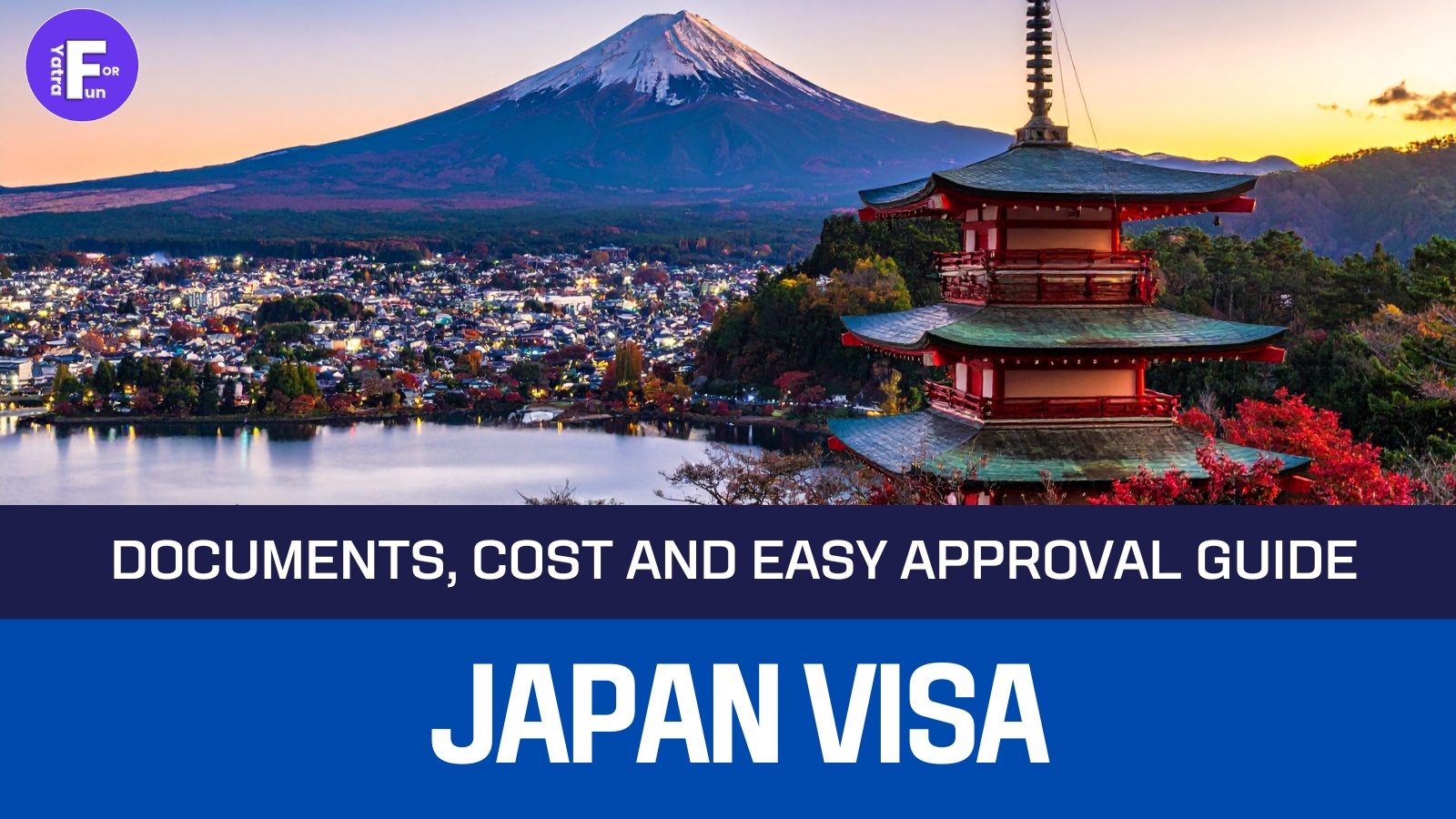
A Japan work permit for an Indian is a two-stage process: the Japanese employer obtains a Certificate of Eligibility (COE) in Japan, which takes 1 to 3 months as standard and costs nothing, and you then apply for the working visa at a VFS centre in India. The visa costs INR 500 plus an INR 800 VFS charge and is processed in a few working days once the COE is in hand.
Key takeaways
- The employer, or another proxy in Japan, applies for the Certificate of Eligibility at a regional immigration office.
- COE standard processing is 1 to 3 months and the COE itself carries no fee.
- At VFS in India you pay INR 500 for the visa plus an INR 800 service charge per application.
- Visa-stage processing after the COE is a minimum of 3 to 6 working days at most missions, and 10 to 12 processing days in the Mumbai jurisdiction.
- Since 15 April 2026, some employers must add a representative declaration and B2-level language proof for language-based jobs.
The official process that the Ministry of Foreign Affairs of Japan (MOFA) and the Immigration Services Agency describe has two stages: the COE in Japan and the visa in India. That pair is what most people mean by a Japan work permit. The facts below are as published on the official sources, checked on 15 October 2026. For every other visa type, see our Japan visa hub for Indian applicants.
What does the Japanese employer do first?
The employer starts the process, not you. Once you have a job offer and a contract, the employer, or another proxy in Japan, applies for a Certificate of Eligibility at a regional immigration office in Japan. The Immigration Services Agency gives a standard processing period of 1 to 3 months and charges no fee for the COE.
The COE confirms that your planned activity fits a working status. MOFA's working visa covers Professor, Artist, Religious activities, Journalist, Business manager, Legal/Accounting services, Medical services, Researcher, Instructor, Engineer/Specialist in Humanities/International Services and Nursing care. Engineering and IT roles are covered by Engineer/Specialist in Humanities/International Services, whose rules are set out below.
When the COE is issued, the employer sends it to you. VFS accepts the original, a copy or a printout of an electronic COE (e-COE).
How long does each stage take?
The COE is the slow part. The visa stage in India is short once the COE exists, but it varies by the consulate that covers your state.
| Stage | Who acts | Official time | Cost |
|---|---|---|---|
| COE application in Japan | Employer or proxy | 1 to 3 months (standard) | No fee |
| Visa at VFS, Embassy of Japan New Delhi jurisdiction | You | Minimum 5 working days | INR 500 + INR 800 VFS |
| Visa at VFS, Mumbai jurisdiction | You | Mumbai 10 processing days; Pune, Ahmedabad, Goa 12 | INR 500 + INR 800 VFS |
| Visa at VFS, Chennai jurisdiction | You | Minimum 3 working days | INR 500 + INR 800 VFS |
| Visa at VFS, Kolkata jurisdiction | You | Minimum 5 working days | INR 500 + INR 800 VFS |
| Visa at VFS, Bengaluru jurisdiction | You | Minimum 6 working days | INR 500 + INR 800 VFS |
These visa-stage times are indicative. MOFA says an application without problems takes five working days from the day after it is accepted, and anything from a couple of weeks to several months if extra documents, an interview or inquiries are needed. After issue, a single-entry visa is basically valid for three months, so you must enter Japan within that window or apply again.
Which rules does the job itself have to meet?
For the Engineer/Specialist in Humanities/International Services status, the landing criteria check your education, experience and pay:
- A university degree, or equivalent education, in a related subject; or a related course at a Japanese vocational school; or 10 years of practical experience.
- IT workers holding a designated IT qualification are exempt from the education and experience condition.
- Jobs based on foreign culture, such as translation, interpretation, language teaching, PR, overseas trade, design or product development, need at least 3 years of related experience. University graduates doing translation, interpretation or language teaching are excepted.
- Pay must be at least what a Japanese national would receive for the same work.
- The landing criteria contain no age requirement.
A rule change took effect on 15 April 2026. Where the employer is in Category 3 or 4, the application must include a declaration about the employer's representative. For work mainly using language skills, such as translation or hotel front desk roles, it must also include proof of CEFR B2-level ability in the working language; JLPT N2 or above counts for Japanese. The period of stay granted is 5 years, 3 years, 1 year or 3 months.
What do you submit at VFS in India?
Every jurisdiction asks for the same core: your passport with more than two blank pages plus any old passports, a copy of the first and last pages, a signed application form, one photograph and the COE. Each consulate's checklist then adds its own items.
- Delhi (Embassy of Japan): experience certificate and educational certificate.
- Mumbai (checklist CL-07, November 2025): covering letter, original COE and one copy, experience certificate, CV and a copy of the contract with the Japanese employer.
- Bengaluru: covering letter, COE original and copy, and an employment certificate or relieving/resignation letter, or your degree certificate if you recently finished studying. A passport issued outside Karnataka needs residence proof.
Photo size differs: Delhi, Bengaluru and Kolkata ask for 45mm x 35mm, while Mumbai and Chennai state 2 x 2 inch. All photocopies must be on A4, and only the passport is returned.
Which VFS centre handles your state?
You apply where you live. The Embassy in New Delhi covers Delhi, Haryana, Punjab, Rajasthan, Uttar Pradesh, the north-eastern states and others in the north. The Mumbai consulate covers Maharashtra, Gujarat, Goa, Madhya Pradesh and Chhattisgarh; from 19 October 2026 its VFS centres in Mumbai, Pune, Ahmedabad and Goa take applications by prior appointment only. Chennai covers Tamil Nadu, Andhra Pradesh, Telangana, Kerala and Puducherry. Kolkata covers West Bengal, Jharkhand, Bihar and Odisha. Bengaluru covers Karnataka.
One conflict to check: VFS Mumbai says Skilled Labour visa holders with a COE must apply directly at the Consulate, while the Consulate says it has not accepted direct applications since 20 April 2026. If your role is Skilled Labour in the Mumbai jurisdiction, confirm the filing point before you book.
What can delay or derail the process?
- Applying without a COE. It is possible, but MOFA says it needs a large number of documents and can take several months.
- Treating the COE as approval. A COE does not guarantee that the visa will be issued.
- A refusal. MOFA does not give the reason, and a new application for the same purpose is not accepted within six months unless circumstances have changed significantly and travel is needed on humanitarian grounds.
- Mismatched documents. The experience certificate, CV and contract should describe the same role the employer declared for the COE.
Indians are one of Japan's largest visa nationalities: MOFA counted 265,882 Japanese visas issued to Indian nationals across all visa types in 2025. The MOFA working visa page lists the statuses in full.
The Mumbai and Bengaluru checklists ask for a covering letter. Yatra For Fun's India office in Gurugram drafts cover letters and prepares flight reservations, hotel bookings and itineraries for visa files, with packages from INR 1,000 for a flight reservation to INR 3,000 for the full set. Contact us on WhatsApp at +91 95230 91018 or via our contact page.
Frequently asked questions
Can an Indian apply for a Japanese work visa without a Certificate of Eligibility?
Yes, but MOFA says applying without a COE requires a large amount of verification documents and processing can take several months. Most employers obtain the COE in Japan first because the visa stage is then short.
Is there an age limit for a Japan work visa?
The landing criteria for Engineer/Specialist in Humanities/International Services set education, experience and pay conditions and contain no age requirement.
Does a Certificate of Eligibility guarantee the Japanese work visa?
No. MOFA states that a COE does not guarantee the visa will be issued. The consulate still examines the visa application and may request an interview or additional documents.
Who pays the INR 800 VFS charge for a Japan work visa?
The applicant pays it at the VFS centre with the INR 500 visa fee. The VFS service charge is non-refundable and is levied even on applicants exempted from visa fees.
Drafted with AI assistance from Yatra For Fun's India visa dataset, which is compiled from official embassy, VFS Global and government sources (see Sources). Fees and rules change — confirm on the official site before you apply.
About Sandeep Kumar Chaudhary
Founder, Yatra For Fun Pvt Ltd
Sandeep Kumar Chaudhary founded Yatra For Fun in Kathmandu after a decade running visa applications for Nepali pilgrims, students, and business travellers. Most Yatra For Fun visa guides are compiled from templates and the company's visa-requirements dataset rather than written individually.
Full profile →Step by step
- 1
Secure the job offer and contract
Agree the role, pay and contract with the Japanese employer. The pay must be at least what a Japanese national would earn for the same work, and your degree or experience must match the job.
- 2
Employer applies for the COE in Japan
The employer or another proxy files the Certificate of Eligibility at a regional immigration office in Japan. Standard processing is 1 to 3 months, with no fee.
- 3
Receive the COE
The employer sends you the COE. VFS accepts the original, a copy or a printout of an e-COE.
- 4
Prepare your VFS file
Assemble passport, old passports, bio-page copies, signed form, one photo and the COE, plus your consulate's extras such as experience certificate, CV, contract copy or covering letter.
- 5
Submit at the VFS centre for your state
Apply at the centre covering your residence and pay INR 500 visa fee plus the INR 800 VFS service charge. Book an appointment where one is required.
- 6
Collect the visa and travel
Visa-stage processing is indicative at 3 to 12 working or processing days depending on the consulate. Enter Japan within the visa's validity, basically three months for a single-entry visa.
Sources
- Ministry of Foreign Affairs of Japan - Working visa — Ministry of Foreign Affairs of Japan
- Immigration Services Agency of Japan - Certificate of Eligibility application — Immigration Services Agency of Japan
- Embassy of Japan in India - Visa (fees from 1 July 2026) — Embassy of Japan in India
- VFS Japan Mumbai - CL-07 long-term visa with COE checklist (Nov 2025) — VFS Global
Related guides
Other Yatra For Fun visa guides you may need.

Netherlands Visa Sponsorship Jobs for Indians: How Hiring Works
In the Netherlands the employer, not the worker, applies for the permit. How IND-recognised sponsors work, the 2026 salary thresholds for each route, and what happens in India after approval.
Read guide
Cyprus Visa from India: Flight Reservation vs Confirmed Ticket
Cyprus asks Indian applicants for a two-way flight itinerary, not a purchased ticket. Here is what a reservation must show, when a ticket matters and what to avoid.
Read guide
Egypt Multiple-Entry Visa Nepali 2026: Eligibility & Validity
Complete 2026 guide to the Egypt multiple entry visa for Nepali passport holders — documents, fees, processing time, embassy contact in Kathmandu.
Read guide
How to Write a Cover Letter for Hong Kong Visa
For a Hong Kong visa from Nepal (Hong Kong Visit Visa (Tourism / Family / Short Business)), prepare a valid passport, application, photos, proof of funds, and proof of onward t
Read guide
Do Nepali Need a Salary Slip for New Zealand Visa?
For a New Zealand general visa from Nepal (Visitor Visa — Tourist), prepare a valid passport, application, photos, proof of funds, and proof of onward travel and accommodation. Pro
Read guide
Pakistan Conference & Trade-Fair Visa for Nepali Business Travellers
Pakistan Conference & Trade-Fair Visa for Nepali Business Travellers — verified against Embassy of the Islamic Republic of Pakistan — Kathmandu: fee, processing time, document checklist, proof of funds, embassy contact, and how Nepali citi…
Read guide