Australia Student Visa Requirements for Indians: 2026 Checklist
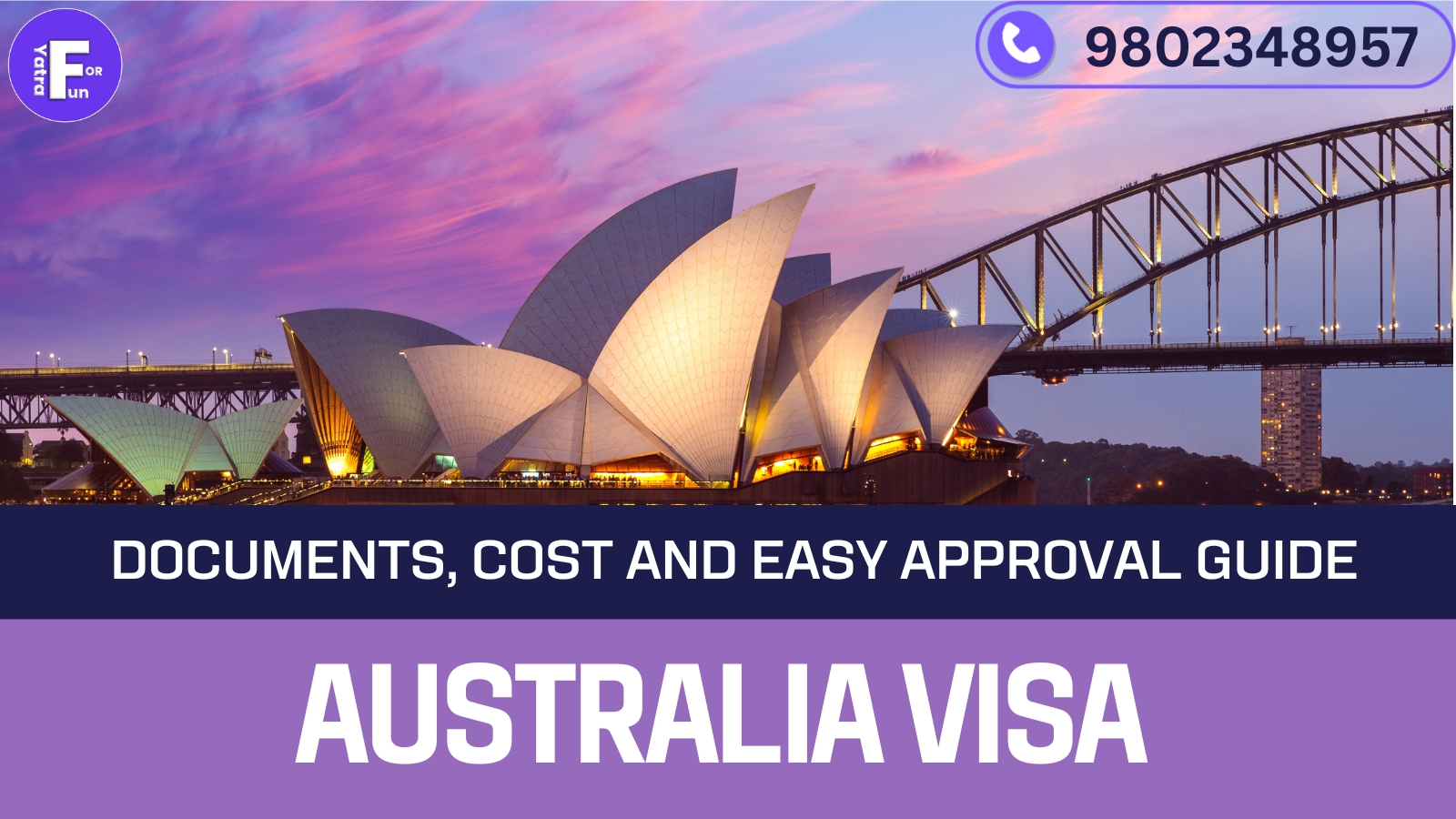
Indians applying for an Australian Student visa (subclass 500) need a CoE for every course, Genuine Student answers with evidence, OSHC, English results and funds evidence if the Document Checklist Tool asks. Living costs are AUD 29,710 for 12 months, and the application charge is AUD 2,500. From 2 October 2026 most applicants must apply outside Australia and cannot include family.
Key takeaways
- A Confirmation of Enrolment for every intended course is mandatory; without it the application is invalid.
- Funds, if requested: AUD 29,710 living costs, first-year course fees and AUD 2,000 travel, or parental income of AUD 87,856.
- Standard English minimums: IELTS 6.0, PTE Academic 47, TOEFL iBT 67; at-home tests are not accepted.
- From 2 October 2026 most Student visas must be lodged outside Australia and most applicants cannot include family members.
- Grant rate for Indian citizens applying outside Australia was 59.5% in October-December 2025 (Home Affairs).
Use the list below alongside the Document Checklist Tool in ImmiAccount, which Home Affairs updates on 31 March and 30 September, and check it again just before you lodge. All figures are as published on the official sources, checked on 15 October 2026. For tourist, work and PR routes, see our Australia visa guide for Indians.
What goes on the 2026 subclass 500 checklist?
| # | Item | What Home Affairs asks for |
|---|---|---|
| 1 | Passport | Pages with photo, personal details and issue/expiry dates; national identity card if you have one; proof of any change of name |
| 2 | Confirmation of Enrolment (CoE) | For every intended course, in a full-time CRICOS-registered course; still valid when the visa is decided |
| 3 | Genuine Student answers | Typed in the online form, in English, 150 words each |
| 4 | Genuine Student evidence | Academic transcripts, current employment details, ties to India, economic circumstances (for example 12 months of employment or business records, tax returns or bank statements) and why you are not studying a similar course in India |
| 5 | English test result | If the Document Checklist Tool requires it; online or at-home tests are not accepted |
| 6 | Financial capacity | If required: deposits, loans or scholarships, or parents' or partner's income shown by official documents, plus evidence of genuine access to the money |
| 7 | Overseas Student Health Cover | Insurer name and policy start/end dates (policy number if you arranged it yourself) |
| 8 | Under-18 documents | Form 1229 consent from each parent with ID, birth certificate naming parents, and welfare arrangements (CAAW from the provider or Form 157N) |
| 9 | Translations and scans | English translations with translator details; everything scanned in colour |
| 10 | Health, character and biometrics | Only if requested; biometrics within 14 days of the request |
The Home Affairs Student visa page is explicit on two points: the application is invalid without a CoE for every course, and it is refused if OSHC details are not given.
How much money do Indian students need to show?
If the Document Checklist Tool asks for financial capacity, the 2026 figures are:
- AUD 2,000 for travel (the guide amount when applying from outside Australia anywhere other than Africa)
- Your first 12 months' course fees
- 12 months' living costs: AUD 29,710 for the student, AUD 10,394 for a partner and AUD 4,449 per child
- At least AUD 13,502 a year in school costs for each school-age child
There is an alternative. Your parents' or partner's personal annual income can stand in for savings if it was at least AUD 87,856 in the 12 months before you apply (AUD 102,500 if family members come). It must be shown with official government documents such as tax assessments. Bank statements or employer letters are not accepted for this income test, so Indian families need official tax documents such as income tax assessments, not salary slips.
Whichever route you use, Home Affairs wants evidence of genuine access. Show how deposits were built up, for example through transaction history and salary patterns. A single-day bank balance certificate does not show this. For an education loan, include the loan terms and disbursement details.
Which English test scores does Home Affairs accept?
The score tables below apply to tests taken on or after 7 August 2025 and within 2 years of applying.
| Test | Minimum score | Condition |
|---|---|---|
| IELTS Academic or General Training | 6.0 | Standard minimum |
| IELTS Academic or General Training | 5.5 | With at least 10 weeks of ELICOS |
| IELTS Academic or General Training | 5.0 | With at least 20 weeks of ELICOS |
| PTE Academic | 47 | Standard minimum |
| TOEFL iBT | 67 | Select "Taking TOEFL for Australia" when registering (from 21 January 2026) |
Fully online or at-home tests, such as IELTS Online, are not accepted.
How do you write Genuine Student answers that hold up?
Home Affairs uses your answers to judge whether studying in Australia is the main reason for the visa. Under the Genuine Student requirement, it considers:
- Your ties and economic circumstances in India
- Why you chose this course and this provider
- The value of the course to your future
- Your research into the course and into living in Australia
- Your immigration history, including past refusals or cancellations
Write each answer yourself and back every claim with a document from item 4 of the checklist. If you hold a job in India, attach the employment details; if your family runs a business, include its records.
What changed for Indian students on 2 October 2026?
New Student visa rules took effect on 2 October 2026. Most applications must now be lodged outside Australia, and most applicants can no longer include family members. Exemptions include PhD students, DFAT- or Defence-sponsored students and holders of fully funded foreign-government scholarships. Applications lodged before that date are assessed under the old rules.
Two earlier changes still apply. From 1 July 2026 the application charge became AUD 2,500 for the main applicant (AUD 2,050 for standalone ELICOS or Non-Award courses). Applications lodged outside Australia on or after 14 November 2025 are processed under Ministerial Direction 115.
How long will you wait, and what do the grant figures show?
Home Affairs' global processing guide (all nationalities) shows Higher Education applications at 50% in 16 days and 90% in 4 months; Vocational Education and Training at 50% in 53 days and 90% in 7 months; and Postgraduate Research at 50% in 17 days and 90% in 55 days.
For Indian citizens applying outside Australia, primary applications granted between 1 October and 31 December 2025 had a median of 23 days, with 75% within 36 days. In the same quarter, the grant rate for that group was 59.5%, down from 79.9% in the same quarter of 2024. That figure is grants as a percentage of grants plus refusals, from the Home Affairs student visa program report. It describes past decisions, not your own chances.
Checklist mistakes to avoid
- Lodging before you have a CoE for every course in a packaged offer.
- Booking IELTS Online or another at-home test.
- Relying on a one-day balance certificate instead of statements that show how the money was saved.
- Using salary slips or an employer letter for the parental income test, which needs tax assessments.
- Copy-pasted Genuine Student answers with no supporting documents.
- Forgetting that work rights start only once your course starts: up to 48 hours a fortnight in session, unlimited when it is not.
Yatra For Fun's India office in Gurugram prepares flight reservations, hotel bookings, itineraries and cover letters for visa files, with packages from INR 1,000 (flight reservation) to INR 3,000 (reservation, hotel, itinerary and cover letter). For a student file this is usually limited to a reservation or cover letter. Contact us on WhatsApp at +91 95230 91018 or through our contact page.
Frequently asked questions
Can I work while studying in Australia on a subclass 500 visa?
Yes, once your course has started. You can work up to 48 hours a fortnight while the course is in session and unlimited hours when it is not.
Can I take my spouse to Australia on my student visa after October 2026?
In most cases, no. From 2 October 2026 most Student visa applicants can no longer include family members. Exemptions include PhD students, DFAT- or Defence-sponsored students and fully funded foreign-government scholarship holders.
Do Indian students have to give biometrics for an Australian student visa?
Only if Home Affairs asks. The Department tells you when biometrics are needed, and you must provide them within 14 days of the request. VFS Global runs Australian Biometrics Collection Centres in listed countries, and India was not on that list as of March 2026, so follow the instructions in your request letter.
What is the minimum age for an Australian student visa?
You must be at least 6 years old. School students must be under 17 when starting Year 9, under 18 for Year 10, under 19 for Year 11 and under 20 for Year 12, and anyone under 18 needs approved welfare arrangements.
Drafted with AI assistance from Yatra For Fun's India visa dataset, which is compiled from official embassy, VFS Global and government sources (see Sources). Fees and rules change — confirm on the official site before you apply.
About Tarka Raj Jaisi
Travel Writer, Yatra For Fun
Tarka Raj Jaisi writes visa process and document guides for Yatra For Fun, covering tourist, transit, invitation, dependent and student visas for Nepali passport holders. Template-built guides are credited to the Yatra For Fun Editorial Team, not to individual writers.
Full profile →Sources
- Department of Home Affairs - Student visa (subclass 500) — Department of Home Affairs, Australia
- Department of Home Affairs - Genuine Student requirement — Department of Home Affairs, Australia
- Department of Home Affairs - Changes to Student visa application rules (subclasses 500 and 590) from 2 October 2026 — Department of Home Affairs, Australia
- Department of Home Affairs - Student and temporary graduate visa program report, 31 December 2025 — Department of Home Affairs, Australia
Related guides
Other Yatra For Fun visa guides you may need.
Where Do Nepalis Apply for a Tajikistan Visa? Delhi, Tashkent or Online
Where Do Nepalis Apply for a Tajikistan Visa? Delhi, Tashkent or Online — verified against Embassy of Tajikistan — New Delhi (consular jurisdiction over Nepal): fee, processing time, document checklist, proof of funds, embassy contact, and…
Read guide
Which France Visa Should Indians Apply For?
Match your trip to the right French visa: short-stay purposes, student and work long-stay visas, family routes, overseas territories and multi-year options for Indians.
Read guide
Uzbekistan Work Visa Cost, Minimum Salary & Medical Test for Nepalis
Uzbekistan Work Visa Cost, Minimum Salary & Medical Test for Nepalis — verified against Embassy of the Republic of Uzbekistan — New Delhi (consular jurisdiction over Nepal): fee, processing time, document checklist, proof of funds, embassy…
Read guide
How to Get a South Korea Visa from India in 2026 (Full Guide)
How Indians apply for a Korean visa in 2026: the Visa Portal e-Form, which KVAC covers your state, the INR fees from 1 August 2026, documents, processing times and visa-free exceptions.
Read guide
Thailand Visa for Nepali Living in Australia 2026
How Nepali citizens living in Australia apply for a Thailand visa without returning to Nepal — residence proof, documents, costs in AUD, processing time, and Yatra's diaspora visa assistance.
Read guide
Myanmar Stay Permit Renewal, Extension & Cancellation for Nepali Workers
Myanmar Stay Permit Renewal, Extension & Cancellation for Nepali Workers — verified against Embassy of the Republic of the Union of Myanmar — Kathmandu: fee, processing time, document checklist, proof of funds, embassy contact, and how Nep…
Read guide