South Korea Student Visa Step by Step: University Admission to D-2 (Nepal)
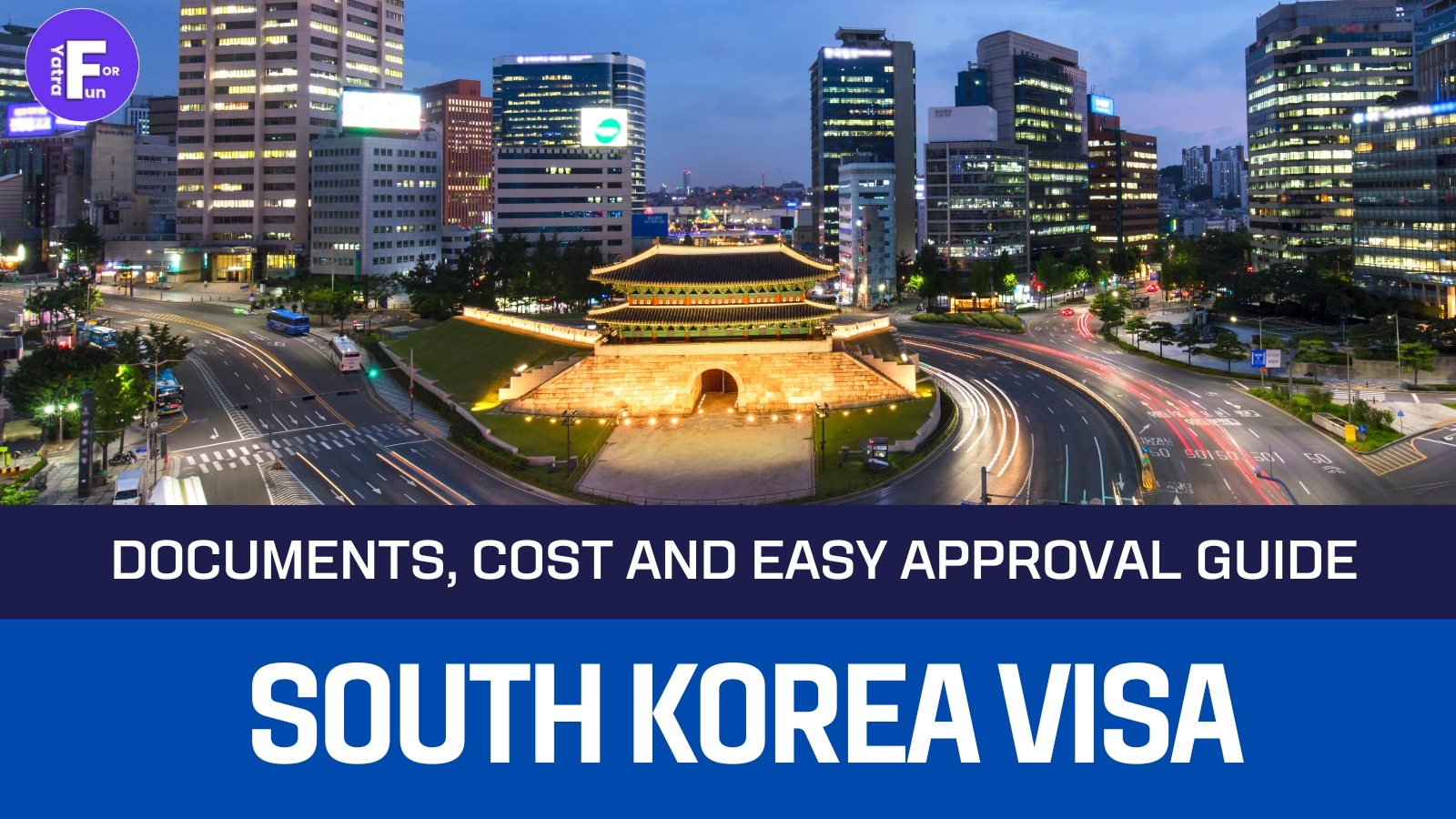
South Korea student visa, Nepali passport (2026): processing 2–6 weeks, stay Per programme. Apply through Embassy of the Republic of Korea — Kathmandu / Embassy of Korea Kathmandu (in person). Carry certified English translations and a consistent flight + hotel + itinerary.
Key takeaways
- Fee varies by visa class — confirm on the official portal.
- Processing time: 2–6 weeks.
- Allowed stay: Per programme.
- Apply at: Embassy of the Republic of Korea — Kathmandu (Embassy of Korea Kathmandu (in person)).
- Certified English translations are mandatory for Nepali-language documents.
South Korea student visa for Nepali citizens (2026). South Korea Student Visa Step by Step: University Admission to D-2 (Nepal) — verified against Embassy of the Republic of Korea — Kathmandu and updated when the rules change. processing 2–6 weeks; allowed stay Per programme. Below: the official figures, the document checklist, proof-of-funds guidance, the embassy contact, and the mistakes that get Nepali files refused.
How to apply for the South Korea student visa from Nepal — step by step
- Confirm the route — Apply at Embassy Kathmandu after Korean institution acceptance.
- Assemble documents — gather the checklist below, with certified English translations.
- Book & pay — submit the application and pay the fee (Varies by visa class — confirm on the official portal); give biometrics if asked.
- Track — processing runs 2–6 weeks; collect the passport or download the e-visa on approval.
Korea Student Visa (D-2 General Studies / D-4 Language) — key facts
| Visa class | Korea Student Visa (D-2 General Studies / D-4 Language) |
| Government fee | Varies by visa class — confirm on the official portal |
| Processing time | 2–6 weeks |
| Allowed stay | Per programme |
| Validity | 90 days entry; convert to ARC after arrival |
| Entries | Single visa; multi on ARC |
| How to apply | Apply at Embassy Kathmandu after Korean institution acceptance |
Documents South Korea asks Nepali applicants for
- Passport, photo
- Standard Admission Letter from Korean institution
- Academic transcripts (notarised English translation)
- Bank statement (USD 10,000+ for 1 year)
- TOPIK / IELTS / language test results (if applicable) — Where required by programme.
- Tuberculosis test
- ANY ONE income bundle — Business / Salary / Pension / Rental (only one needed) — See per-bundle breakdown below — submit the bundle that matches your active income source.
- Income Details & Supporting Documents (For Visa Application) — Important Notes: (1) All documents issued in Nepali language must be translated into English and notarised (certified by a notary public). (2) The applicant is required to provide documents for any ONE source of income only from the categories listed below.
- 1. Business Income (if applicable) — Applicants involved in business must submit the following:
- PAN Certificate — Permanent Account Number certificate issued by the Inland Revenue Department (IRD).
- Business Registration Certificate — Submit ONE of: (a) Company Registrar Certificate (for private/public limited companies), (b) Cottage / Small Industry (Gharelu) Registration, OR (c) Municipality / Ward (Wada) Registration Certificate.
- Additional Registration Certificates (if applicable) (if applicable) — Sector-specific endorsements: (a) Tourism Board Registration for travel-related businesses, (b) Nepal Rastra Bank (NRB) Registration for financial institutions, (c) Contractor License from Municipality / Ward Office.
Proof of funds for the South Korea student visa
As a Nepali applicant, show a 3–6 month bank statement plus income proof matched to your source: salary slips and an employer/leave letter if you're employed, business registration (PAN/VAT) and tax clearance if self-employed, or a sponsor's bank statement and a notarised sponsorship letter if someone funds your trip. Money that lands suddenly just before you apply is a common refusal trigger — keep the balance steady for months.
Processing time, validity & extension
Plan for 2–6 weeks once South Korea has a complete file. The visa is valid 90 days entry; convert to ARC after arrival and lets you stay Per programme (Single visa; multi on ARC). Apply at least 3–4 weeks before departure; festivals and embassy holidays in both countries can stretch the window. If you need longer in South Korea, ask about the in-country extension rule before your stay expires — overstaying jeopardises every future application.
Before you apply: the Nepal-side prep
Every Nepali-language document — citizenship certificate, birth or marriage certificate, property papers, income proof — must be submitted with a notary-certified English translation. Students also need an admission/offer letter, academic transcripts, and often a NOC from the Ministry of Education. Carry the original plus one photocopy of each, and make sure your name is spelled identically everywhere: passport, ticket, hotel booking and bank statement. A single mismatch is enough to trigger a query.
Why South Korea files get refused — and how to avoid it
- Inconsistent funds — a balance that jumps right before applying.
- Missing translations — Nepali documents submitted without certified English versions.
- Mismatched dates — the flight, hotel and itinerary don't line up.
- Weak ties to Nepal — no job, study, property or family pull to return to.
- Wrong visa class — applying as a tourist for a work or study purpose.
Where Nepalis apply
Embassy of the Republic of Korea — Kathmandu
Red Cross Marg, Tahachal Height, Kathmandu (P.O. Box 1058)
Phone: +977 1 4270172
Email: embkrnp@mofa.go.kr
Official site: https://overseas.mofa.go.kr/np-en/index.do
Visa centre: Embassy of Korea Kathmandu (in person), No VFS partner for Korea in Nepal — apply directly at embassy by appointment.
Frequently asked questions
How much does the South Korea student visa cost from Nepal?
The government fee varies by visa class — check the official portal, plus Nepal-side costs (photos, certified translations, bank statements, and any visa-centre charge).
How long does the South Korea student visa take for Nepali citizens?
Allow 2–6 weeks from a complete submission. Apply 3–4 weeks before travel to absorb peak-season and document-request delays.
What documents do Nepalis need for the South Korea student visa?
Passport (6+ months), photos, bank statements / proof of funds, a confirmed flight and hotel, and purpose-specific letters — with notary-certified English translations of Nepali-language documents.
Where do Nepali citizens apply for a South Korea visa?
Embassy of the Republic of Korea — Kathmandu, Red Cross Marg, Tahachal Height, Kathmandu (P.O. Box 1058), or the visa centre Embassy of Korea Kathmandu (in person). Online: https://www.visa.go.kr (Korean visa portal — limited self-service for Nepalis) · https://overseas.mofa.go.kr/np-en (Embassy Kathmandu).
Get your supporting documents ready
Most South Korea visa files need a confirmed onward flight, a hotel reservation and, for tourist and visit classes, a day-by-day itinerary — with dates that match across all three. Generate reservation documents in minutes:
- Dummy flight ticket for your South Korea visa — a reservation PDF (not an airline PNR).
- Dummy hotel booking for the accommodation proof.
- Travel itinerary document for proof of tour.
- All visa guides for Nepali citizens →
Compiled by Yatra For Fun from templates and our visa-requirements dataset. Fees and rules change — confirm on the embassy's official site before you apply.
Sources
Related guides
Other Yatra For Fun visa guides you may need.
Which South Korea Visa Should a Nepali Apply For? A Type-by-Type Chooser
Which South Korea Visa Should a Nepali Apply For? A Type-by-Type Chooser — verified against Embassy of the Republic of Korea — Kathmandu: fee, processing time, document checklist, proof of funds, embassy contact, and how Nepali citizens ap…
Read guideIs South Korea Visa-Free for Nepali Passport Holders in 2026?
Is South Korea Visa-Free for Nepali Passport Holders in 2026? — verified against Embassy of the Republic of Korea — Kathmandu: fee, processing time, document checklist, proof of funds, embassy contact, and how Nepali citizens apply.
Read guideWho Must Sign a South Korea Visa Invitation Letter?
For a South Korea invitation visa from Nepal (Korea Business Visa (C-3-4)), prepare a valid passport, application, photos, proof of funds, and proof of onward travel and accommodat
Read guideBank Balance Required for South Korea Visa from Nepal
For a South Korea general visa from Nepal (Korea Tourist Visa (C-3-9)), prepare a valid passport, application, photos, proof of funds, and proof of onward travel and accommodation.
Read guide
Dummy Flight Ticket & Hotel Booking for Your China Visa File from Nepal
Dummy Flight Ticket & Hotel Booking for Your China Visa File from Nepal — verified against Embassy of the People's Republic of China — Kathmandu: fee, processing time, document checklist, proof of funds, embassy contact, and how Nepali cit…
Read guide
Do Nepali Qualify for Slovakia Seasonal Work Visas?
For a Slovakia seasonal work visa from Nepal (Schengen Short-Stay Visa (Type C) — Tourism), prepare a valid passport, application, photos, proof of funds, and proof of onward trave
Read guide