Kathmandu Travel Guide 2026: Top Things to Do, Where to Stay, and What to Eat
Kathmandu is a dense, ancient city best explored on foot. Base yourself in Thamel for convenience or Patan for quieter UNESCO streets. Spend 2–3 days on Durbar Squares, Swayambhunath, Boudhanath, and Pashupatinath, add a day trip to Bhaktapur, and eat momos plus a Newari thali. Best months: October–November and March–April.
Key takeaways
- Three to four days covers Kathmandu Valley's main UNESCO sites without rushing.
- Thamel is the easiest base for first-timers; Patan suits repeat visitors.
- October–November has the clearest mountain views and steadiest weather.
- Budget NPR 3,500–8,000 per day mid-range, excluding treks.
- Tourist visa on arrival is straightforward for most nationalities — bring USD cash and a passport photo.
Why visit Kathmandu in 2026
Kathmandu is the cultural heart of Nepal — a dense, ancient city where medieval temples sit beside motorbike traffic and momo stalls. Most international travelers land here before trekking Annapurna or Everest, but the valley itself rewards a three- or four-day stay. Expect UNESCO heritage sites, two of the holiest Buddhist stupas in the world, living Newari towns, and some of the best-value food you'll find in Asia.
Top 10 things to do
- Kathmandu Durbar Square — the old royal complex in the city center. Still recovering from the 2015 earthquake, but Hanuman Dhoka, Taleju Temple, and Kumari Ghar (home of the living goddess) remain striking.
- Patan Durbar Square — across the Bagmati River, 20 minutes from Thamel. Often considered the best-preserved of the three Durbar Squares. Don't miss the Patan Museum inside the old palace.
- Bhaktapur Durbar Square — a full day trip 13 km east. Keep a small ticket fee (NPR 1,800 for foreigners as of 2026) that funds restoration. Eat juju dhau (king curd) before you leave.
- Swayambhunath (the Monkey Temple) — hilltop stupa with Kathmandu Valley views. Climb at sunrise to avoid crowds.
- Boudhanath — the largest stupa in Nepal, ringed by Tibetan monasteries and cafes. Join the kora (clockwise circumambulation) at dusk.
- Pashupatinath — on the Bagmati. One of Hinduism's four most sacred Shiva sites; non-Hindus cannot enter the main temple but can observe cremations respectfully from across the river.
- Thamel evening walk — the tourist quarter. Shop for pashmina, trekking gear, singing bowls, and books. Aggressive bargaining is expected.
- Garden of Dreams — a 20-minute Edwardian retreat inside the Thamel chaos. Good for an afternoon coffee.
- Newari food tour — book a guide or walk yourself through Asan and Indra Chowk. Try chatamari, yomari (seasonal), and buffalo choila.
- Day hike to Nagarkot or Dhulikhel — viewpoints on the valley rim. On a clear October morning you can see Everest, Langtang, and Annapurna ranges from Nagarkot.
Where to stay — neighborhoods at a glance
Thamel — the default tourist base. Most hostels, boutique hotels, trek agencies, and restaurants cluster here. Noise level: high. Walkability: high. Recommended for first-time travelers who want everything within a few minutes.
Patan (Lalitpur) — 20 minutes by taxi from Thamel, much quieter. Stay here if you've been to Kathmandu before or value atmosphere over convenience. The neighborhood around Patan Durbar Square has a handful of restored Newari townhouse hotels.
Boudha — around the stupa. Quiet, spiritual, favored by returning travelers and yoga retreatants.
Budhanilkantha / Kapan — leafy northern suburbs, better air, 30–45 minutes from the city center. Good for families or longer stays.
What to eat
Nepali food splits into two broad traditions. The national dal-bhat-tarkari — lentil soup, rice, seasonal vegetable curry, achar pickle, and (optionally) meat — is what locals eat twice a day. Tea shops and dal-bhat sets in Thamel cost NPR 250–500.
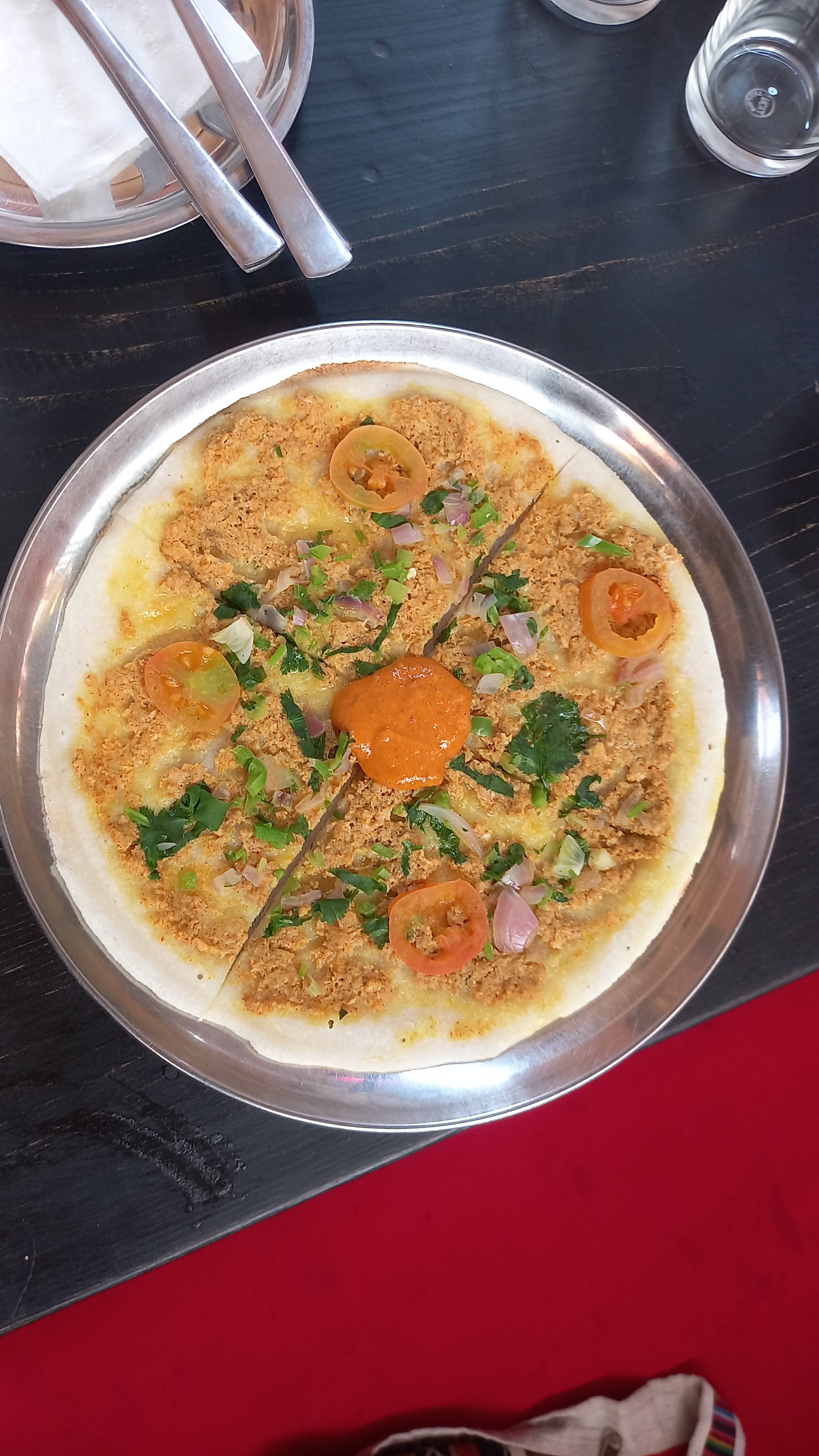
Newari cuisine is the indigenous food of the valley and is more complex: chatamari (rice-flour crepes), yomari (steamed dumplings with jaggery filling, a winter specialty), kwati (nine-bean soup), choila (spiced grilled meat), and samay baji (a ceremonial platter). For a proper sit-down meal go to Bhojan Griha, Krishnarpan at Dwarika's, or the more casual Newa Lahana in Kirtipur.
Don't skip momos — the Himalayan dumpling. Steamed, fried (kothey), or served in soup (jhol momo). Cheap, everywhere, and consistently good.
Getting around
Walking handles most of Thamel and Durbar Square. Beyond that, use the ride-hailing apps Pathao or InDrive — significantly cheaper than metered taxis and with transparent fares. Expect NPR 250–400 for Thamel → Patan, NPR 500–700 to Boudha, NPR 1,200–1,800 to Bhaktapur. Keep small bills; drivers rarely have change.
Best time to visit
October and November are the peak months — dry, clear, mountain views at their sharpest, moderate temperatures. March–April is the secondary peak — warmer, rhododendrons blooming in hill-station day trips, hazier mountain views. Avoid late June through August (monsoon, heavy rain, leeches on any trek). December–February is cold in the valley but good for crowd-free heritage sites if you dress in layers.
Budget
Day-rate bands for 2026 (per person, excluding flights and trek permits):
- Backpacker — NPR 2,500–3,500. Dorm bed, local food, walking + ride-hailing.
- Mid-range — NPR 6,000–10,000. 3-star hotel, mix of local and tourist restaurants, one guided half-day tour.
- Luxury — NPR 20,000+. Heritage hotels (Dwarika's, Hyatt Regency, Soaltee), private driver, fine dining.
Practical notes
Altitude in Kathmandu is 1,400 m — not high enough to cause altitude sickness, but dry air and dust bother many visitors. Keep a reusable water bottle with a sterilization filter; tap water is not safe. Pollution peaks in January–February when the valley traps cold air — an N95 or surgical mask helps on motorbike days. ATMs are common in Thamel; most dispense NPR 35,000 per transaction.
Plan your trip with Yatra
Browse our curated Kathmandu hotel selection, flight deals from major Indian and Gulf cities, and Kathmandu Valley sightseeing packages. Our local team can put together custom itineraries combining Kathmandu with Pokhara, Chitwan, or a trek in 2–3 days.
Frequently Asked Questions
Sources
- Nepal Tourism Board — Official Travel Guide — Nepal Tourism Board
- Kathmandu Valley — UNESCO World Heritage List — UNESCO
- Department of Immigration — Nepal Visa Information — Government of Nepal